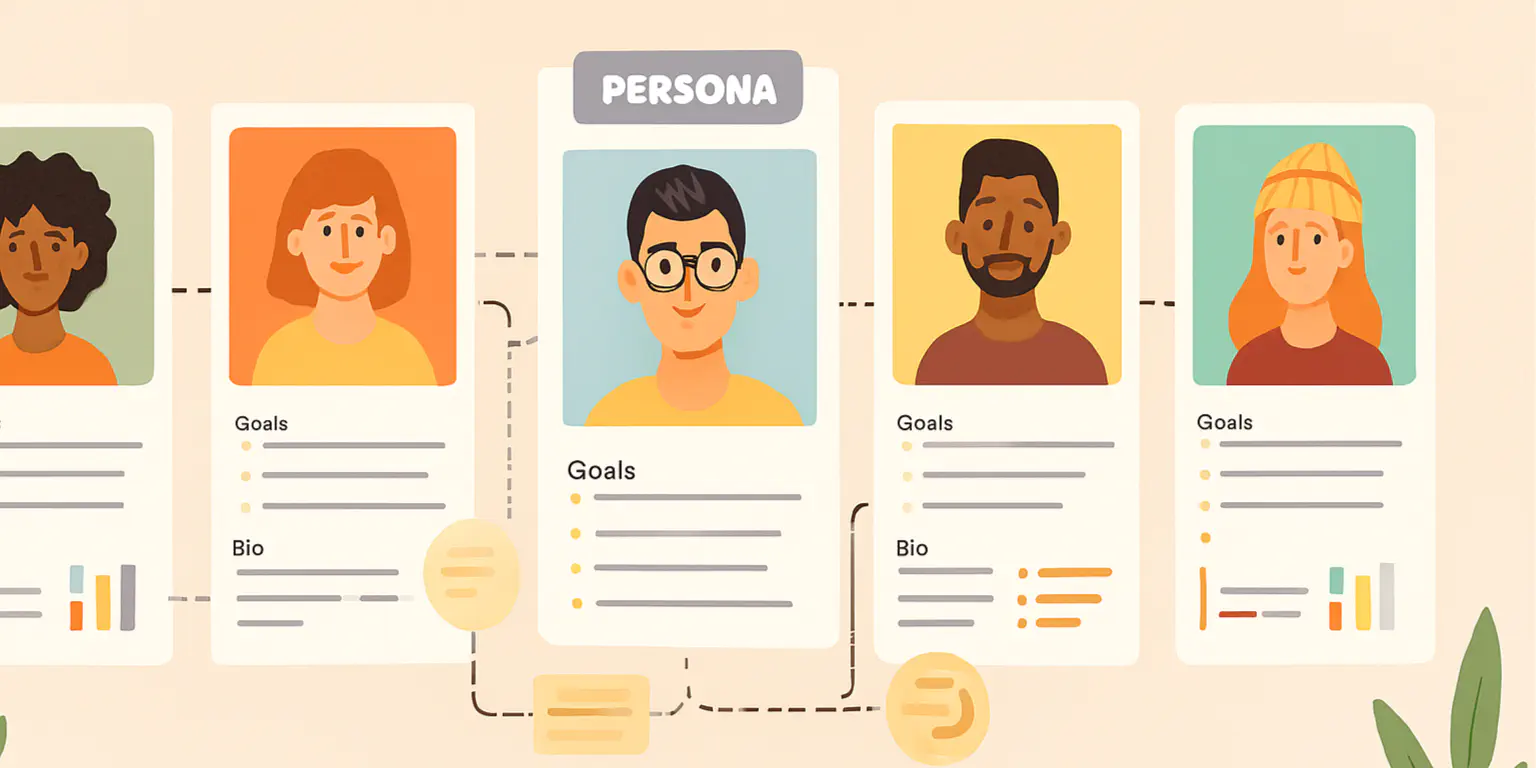
Building a product without knowing your users can feel like navigating in the dark — every decision becomes a guess. That’s why we created Personas at Wawandco: a simple way to turn user insights into meaningful direction.
At Wawandco, we believe great products are born from deep understanding. Personas transform vague user ideas into clear stories, guiding every design and decision with confidence.
In this post, we’ll explore what Personas are, why they matter, and how they can help your team build more human-centered products.
What are Personas?
Personas are semi-fictional profiles of your ideal users — built from real data, not guesswork. They crystallize motivations, frustrations, behaviors, and goals. By profiling your users, they become a reference to your team — not just “users,” but people you design for.
Designing without personas is like navigating without a map — you risk building features that may not resonate or crafting messages that miss their mark.
With them, you can:
- Center product decisions around real needs.
- Prioritize features that meaningfully solve problems.
- Align design, marketing, and development on a unified user vision.
- Cultivate empathy in your team — so every decision starts with the person behind the screen.
When teams include personas consistently, they reduce uncertainty and design with more clarity and purpose.
Integrating Personas into your project
Personas should evolve alongside your product, acting as a referencial compass that orients choices at every stage.
They inform:
- Design direction: Which layout or interaction best fits this persona?
- Messaging & marketing: What tone or hook will move them to act?
- Feature planning: Which features truly add value for these users?
When your team starts thinking of “Isabella, the busy entrepreneur” instead of “a user”, decisions become faster, sharper, and more human. However, to integrate them in our projects, we need personas that truly represent our audience.
How to build personas that work?
Start by researching deeply—interview, observe, and survey real users, because insights matter more than assumptions. As patterns emerge, cluster them to identify shared goals, habits, and pain points across your user base. Then create rich profiles that give each persona a name, story, motivations, and daily context that brings them to life. The real power comes when you operationalize them, letting these personas guide your wireframes, content, and priorities at every turn. Remember to iterate and evolve your personas as your users and market change over time.
Strong personas don’t just describe users — they become tools your team relies on daily.
Bringing Personas to Life with the Right Tools
Personas shouldn’t live in a static document that gets forgotten after the initial research phase. They need a home where your team can easily access, update, and reference them as your product evolves.
That’s why we built Personas by Wawandco — a free tool designed to help teams create, manage, and share user personas effortlessly. With it, you can build detailed persona profiles that stay current as your understanding deepens, ensuring your insights remain sharp and your entire organization stays aligned around who truly matters: your users.
When personas are this accessible, they naturally become part of your team’s daily workflow—present in design sprints, marketing strategies, and product decisions. Instead of referencing abstract “users”, your team starts designing for Isabella, the busy entrepreneur, or Marcus, the cautious decision-maker. That shift from theory to practice is where real transformation happens.
Getting Your Team Onboard
The hardest part of working with personas isn’t creating them—it’s getting your team to actually use them.
Start by involving your team early in the research process. When designers, developers, and marketers participate in user interviews or review findings together, they develop ownership over the personas instead of seeing them as “the UX team’s thing.”
Keep them visible and accessible. Whether it’s through a tool like Personas or printed boards in your workspace, your team should be able to reference them without friction. When everyone knows your personas by name and story, that’s when they transform from research artifacts into decision-making companions.
Wrapping up
Personas transform vague assumptions about users into clear, actionable profiles that guide product decisions. By grounding design, marketing, and development in real user insights, teams can build more human-centered products with confidence and clarity — turning guesswork into strategic direction.
Try creating and managing your own personas with Personas by Wawandco — and see how understanding your users can transform the way you design, build, and deliver software.